
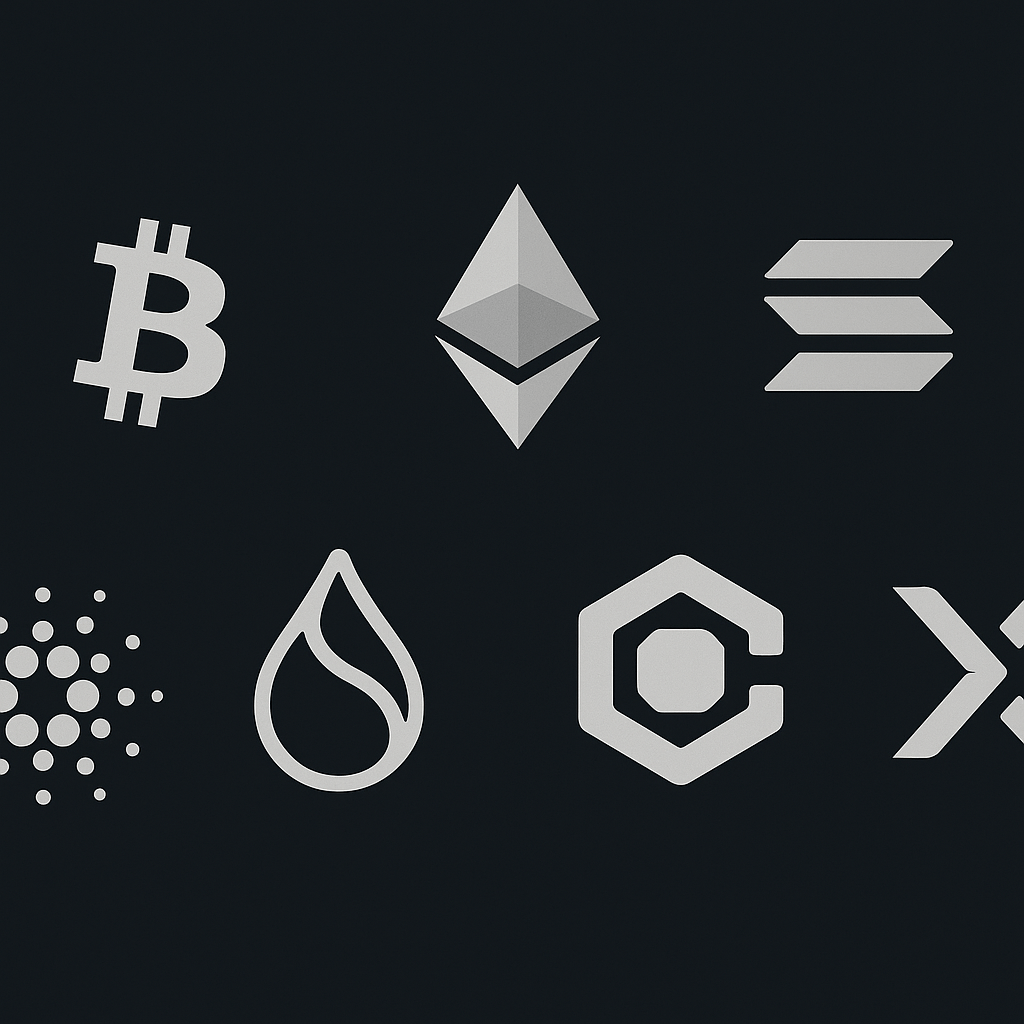
If you’re looking to invest $1,000 in cryptocurrency and want a thoughtful, foundational approach—not just meme coins or hype—you’ve come to the right place.
Instead of chasing trending tokens, this guide focuses on seven core projects that dominate blockchain infrastructure, smart contracts, and real-world utility:
Bitcoin (BTC) Ethereum (ETH) Solana (SOL) Cardano (ADA) Sui (SUI) Cronos (CRO) MultiversX (EGLD)
We’ll break down:
Why these seven tokens matter Three allocation strategies based on your risk tolerance The logic behind each strategy Steps to get started safely
Disclaimer: This is not financial advice. Always do your own research and consult a financial professional before investing.
Why These Seven?
Bitcoin (BTC) – The original and most secure store of value. It’s the “gold standard” of crypto and often the first entry point for new investors.
Ethereum (ETH) – The leading smart contract platform. Most DeFi, NFTs, and dApps live on Ethereum or layer-2s built on top of it.
Solana (SOL) – A fast and low-fee blockchain with a growing DeFi and NFT ecosystem. Solana has bounced back after early outages and remains a developer favorite.
Cardano (ADA) – Built with a research-first approach, Cardano is known for its academic rigor and slow-but-steady rollout of features.
Sui (SUI) – A newer entrant built on the Move language. Sui is focused on speed and scalability, with gaming and DeFi use cases gaining attention.
Cronos (CRO) – Powered by Crypto.com, CRO is a utility token for staking, fee reductions, and rewards. It also supports its own EVM-compatible chain.
MultiversX (EGLD) – A high-throughput, sharded blockchain formerly known as Elrond. It aims to deliver unmatched scalability and is rapidly building out DeFi and NFT tools.
Together, these projects represent a well-rounded entry into the crypto world—from the OGs to emerging challengers.
Three Portfolio Strategies
Let’s dive into three ways you could allocate your $1,000 depending on how conservative or aggressive you want to be.
A. Conservative “Blue-Chip Base”
Token
Allocation %
$ Amount
BTC
35%
$350
ETH
30%
$300
SOL
10%
$100
ADA
10%
$100
SUI
5%
$50
CRO
5%
$50
EGLD
5%
$50
Why This Mix?
This setup is heavily weighted toward stability. With 65% in BTC and ETH, you’re investing in time-tested platforms that anchor the entire crypto economy. A small 5–10% stake in the other coins gives you some exposure to innovation, but with limited downside.
Perfect for first-time investors who want to learn the market slowly and minimize risk.
B. Balanced “Core & Growth”
Token
Allocation %
$ Amount
BTC
25%
$250
ETH
25%
$250
SOL
15%
$150
ADA
10%
$100
SUI
5%
$50
CRO
10%
$100
EGLD
10%
$100
Why Increase CRO to 10%?
CRO offers real-world utility—from Crypto.com card perks to exchange discounts and staking yields. As Crypto.com expands, the demand for CRO could surge. This mix maintains a solid 50% in BTC and ETH while increasing exposure to platform-based token utility via CRO.
This is a great fit if you want exposure to both established networks and rising ecosystems without taking on excessive volatility.
C. Aggressive “High-Beta Explorer”
Token
Allocation %
$ Amount
BTC
10%
$100
ETH
20%
$200
SOL
20%
$200
ADA
10%
$100
SUI
10%
$100
CRO
15%
$150
EGLD
15%
$150
Why Go Heavy on CRO at 15%?
This portfolio is all about high upside potential. CRO’s price is far below its 2021 highs. If Crypto.com gains traction through marketing or DeFi growth, CRO could quickly rebound. Holding 15% makes sense if you believe exchange utility tokens will thrive in the next bull cycle.
It also gives more weight to EGLD and SUI—higher-risk, higher-reward plays that could outperform as adoption increases.
Great for those comfortable with volatility and aiming to maximize returns over a longer time horizon.
Token-by-Token Purpose Recap
Here’s what each coin brings to your portfolio:
BTC: Foundation asset, digital gold. ETH: Leading platform for smart contracts and dApps. SOL: High-speed chain with growing real usage in NFTs and DeFi. ADA: Methodical, secure chain with peer-reviewed updates. SUI: Emerging player with strong technical promises. CRO: Tied to real-world usage and a growing centralized exchange. EGLD: Unique infrastructure (adaptive sharding) with DeFi momentum.
How to Get Started Safely
1. Pick a Reputable Exchange
Use trusted platforms like Coinbase, Binance, Kraken, or Crypto.com. Avoid shady apps or small exchanges.
2. Store Assets Securely
For long-term holding, consider moving assets to a non-custodial wallet like Ledger (hardware) or Trust Wallet (software).
3. Consider Dollar-Cost Averaging (DCA)
Instead of investing the entire $1,000 at once, you could spread it over 4–8 weeks to minimize the impact of short-term volatility.
4. Monitor Your Portfolio Quarterly
Crypto moves fast. Review your holdings every 3–6 months and rebalance if needed.
5. Keep Learning
Follow project updates, protocol upgrades, on-chain data, and regulatory changes. Crypto is part technology, part community, and part economics.
Final Thoughts
Starting your crypto journey with a $1,000 investment doesn’t have to be overwhelming. By focusing on layer-1 blockchains, platform tokens, and established ecosystems, you can build a thoughtful portfolio designed for both growth and stability.
Choose your strategy based on your risk profile. Don’t chase hype—invest with intention. Diversify, manage risk, and stay curious.
Your journey doesn’t end at the buy button—it begins there. Keep learning, keep questioning, and stay grounded in your goals.
Disclaimer: This post is for informational purposes only. It does not constitute investment advice. Always do your own research and consult a financial advisor before making any financial decisions.
 Crypto Careers